Company details
- Legal name
- Zephyron Savunma Teknoloji A.Ş. (Zephyron Defence Technology Inc.)
- Field of activity
- Micro-class unmanned aerial systems — R&D and design
- Period of activity
- 2019 (project) — 2024 (incorporation) — 2026 (closure)
- Product family
- Alaca Modular Micro Helicopter UAV Series
- Intellectual property
- Utility model — Noise-Reducing Rotor Blade (2025/022955)
- Status
- Operations ceased
The name

The name Zephyron derives from Zephyrus, the god of the west wind in Greek mythology. The suffix “-on” signifies power and continuity. The name represents the most critical element at the heart of aviation — airflow.
In aviation everything — from the propeller to the wing profile, from fuselage aerodynamics to the rotor system — rests on directing and managing the wind. The company's objective was defined accordingly: to develop quiet, efficient and stable unmanned systems by bringing airflow under control.
Period of activity
Zephyron was a technology venture founded to develop defence- and aviation-oriented micro UAV systems.
Foundations of the project
The project idea emerged and the first technical work began.
Transition to R&D
In line with growing demand for micro-class UAVs, the project was turned into a comprehensive R&D programme.
Move to a corporate structure
Work carried out with academic mentoring support gained a corporate structure after the completion of a pre-incubation programme.
Incorporation
Zephyron Defence Technology Inc. was founded and began formal operations. The design of the Alaca series and the MK-1 prototype work were carried out in this period.
Utility model registration
The original rotor blade design behind the series' low acoustic signature was registered as a utility model under the title “Noise-Reducing Rotor Blade” (2025/022955, 30 December 2025).
Cessation of operations
The company ceased operations. Designs, prototype work and intellectual property assets are recorded in this archive.
Way of working
Zephyron carried out the entire system engineering effort in-house — not only subsystems such as rotors and airframes, but software, electronics and mechanics as well. Ideas put forward by the engineering team were turned into technical proposals, aligned with current technological standards under academic guidance, and then brought down to prototype level.
The rapid decision-making afforded by a compact team, together with a modular design philosophy, made it possible to produce technical answers to changing operational needs at short notice.
Production and prototyping infrastructure
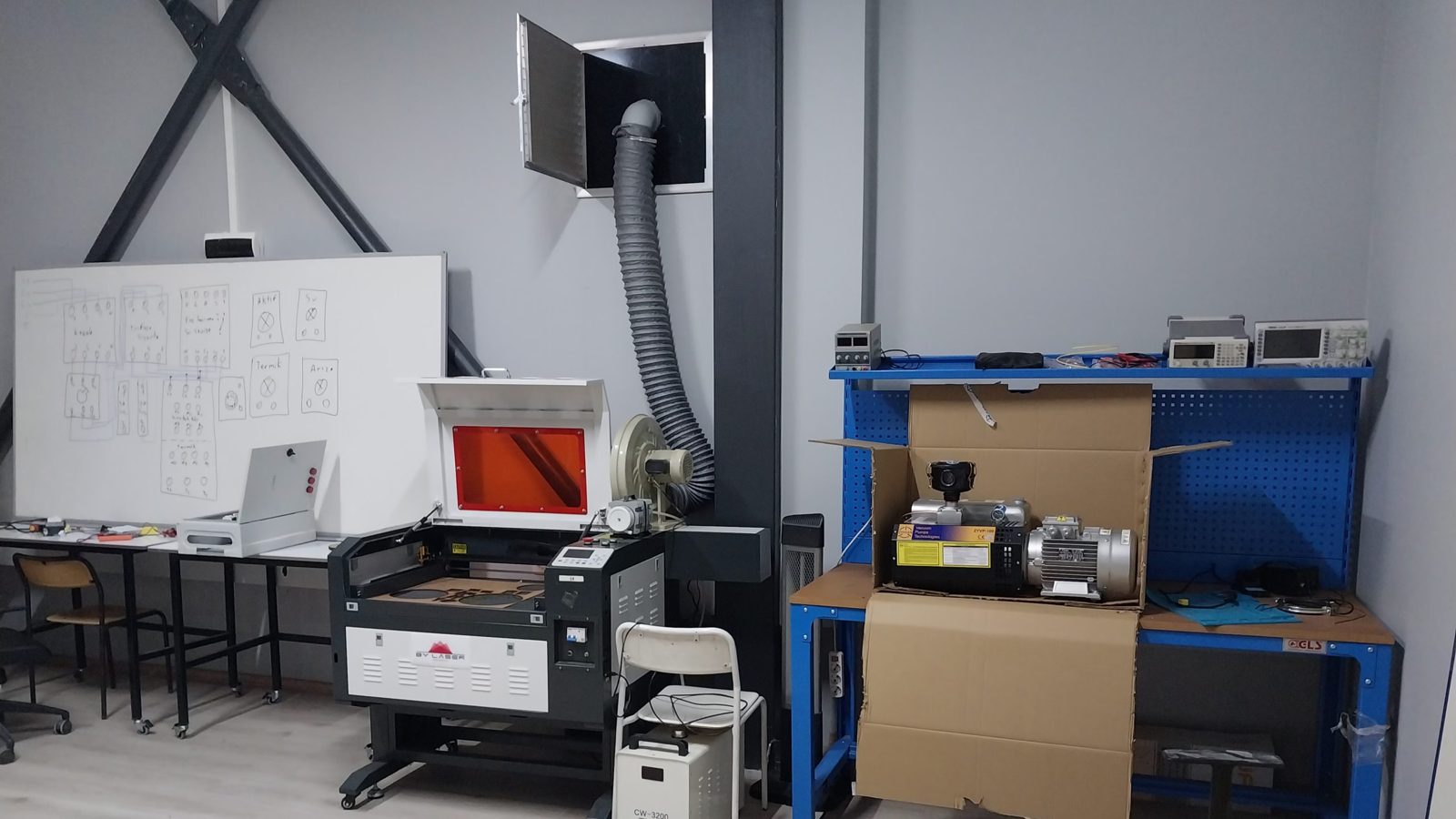
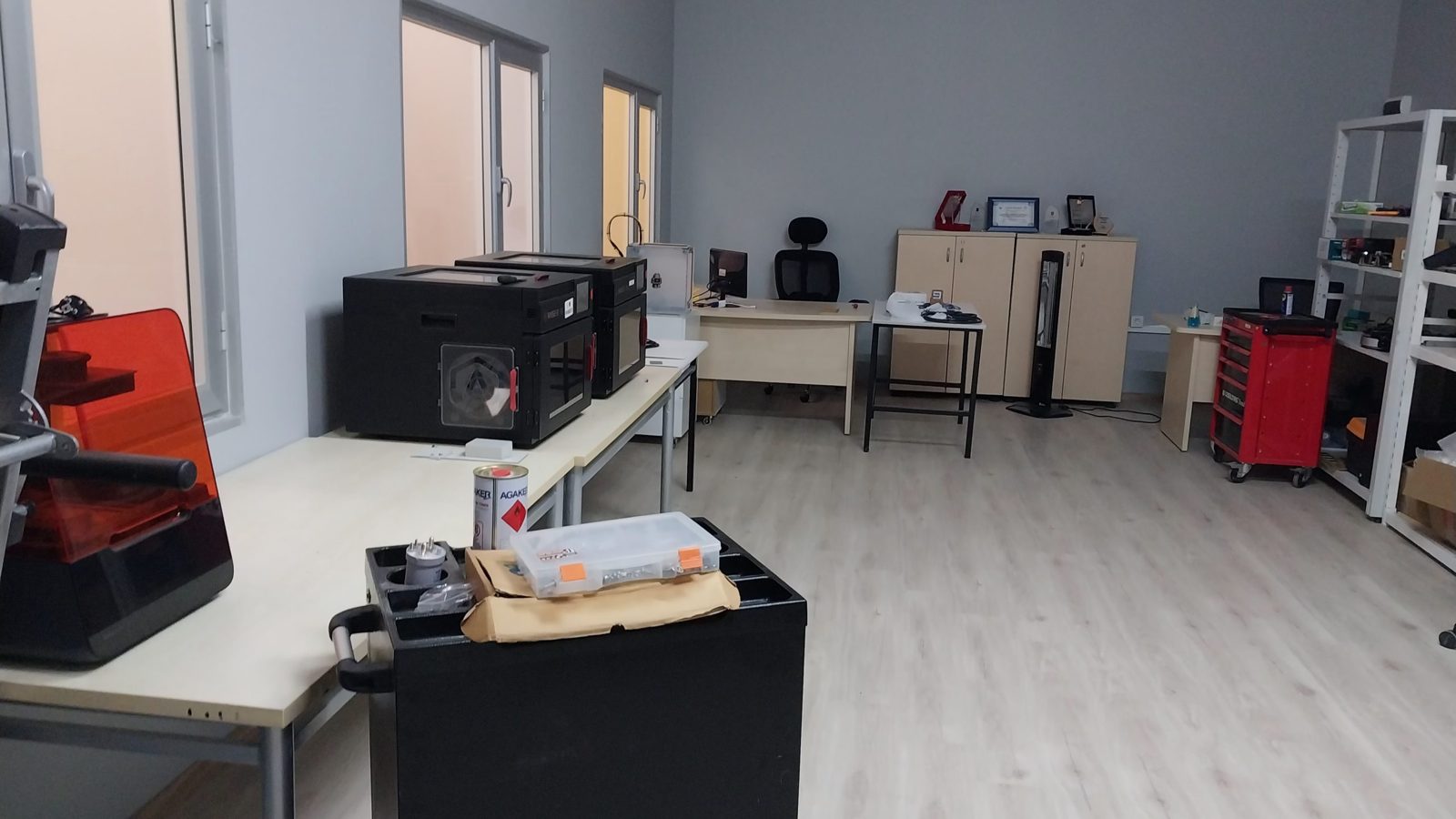
A flexible, versatile infrastructure was used for mechanical and electronic production. High-precision parts were produced with CNC milling and plastic injection moulding, while FDM and SLM additive manufacturing enabled rapid prototyping and design iteration.
Subtractive manufacturing (CNC machining), formative manufacturing (injection moulding) and additive manufacturing (3D printing) were run side by side. In component sourcing, ITAR-Free options from various manufacturers were preferred, establishing a supply architecture free of restrictions.